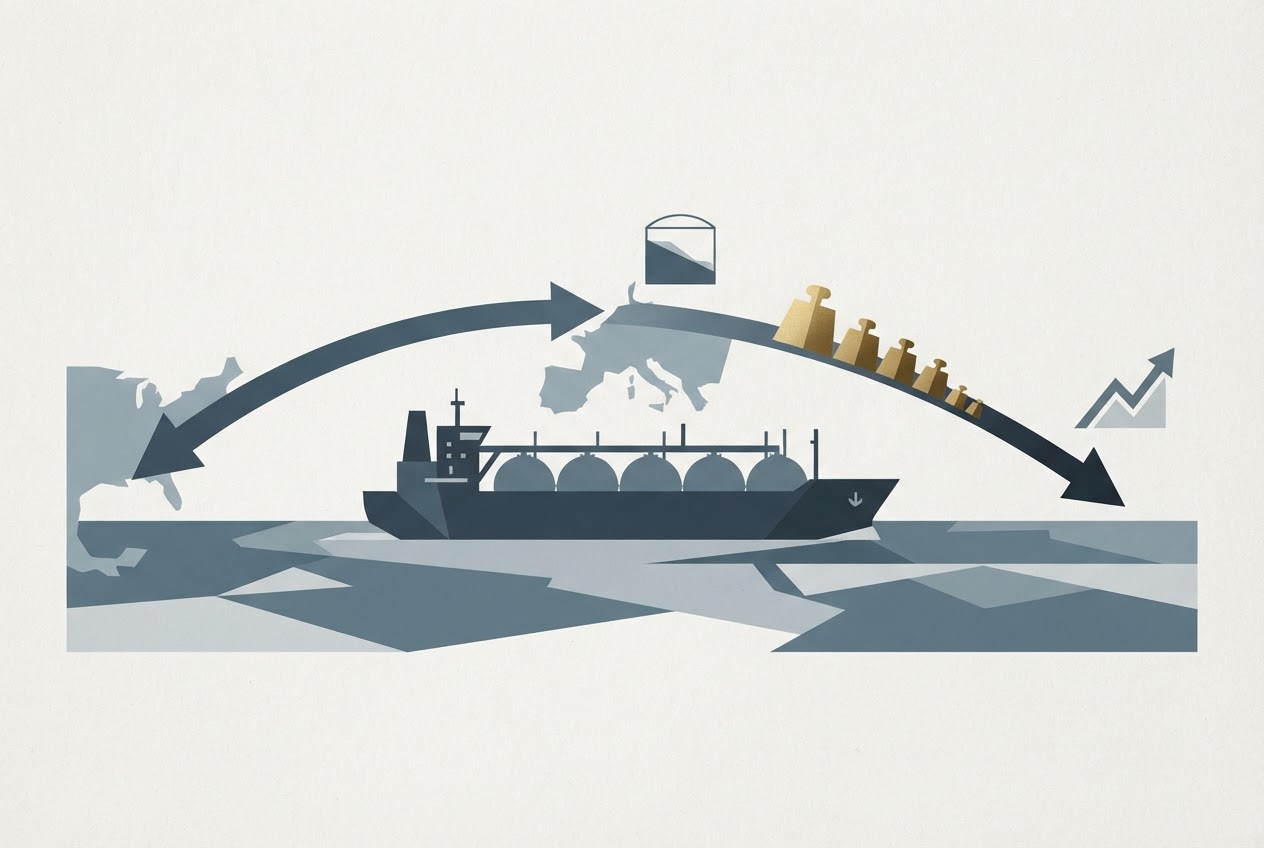
Shipping costs are undermining the economics of moving US butane to Asia even as competing regional demand drives prices higher, according to OilPrice.com. US butane at $920 a tonne, combined with freight to India of about $320 a tonne, implies a delivered cost of $1,240 a tonne. The outlet puts the landed premium over the Asian AFEI benchmark at $50–60 a tonne, making additional US shipments commercially unattractive.
The squeeze comes alongside unusually high regional prices. Northwest European November butane reached $1,125 a tonne in early November, its highest level in 30 years, while AFEI stood at $1,180 a tonne on 3 November. US Belvieu butane reached a 14-year high of $920 a tonne. OilPrice.com contrasts current shipping economics with April, when the landed US-versus-AFEI spread was negative $300–400 a tonne, strongly encouraging exports to Asia.
The report attributes the reshaping of LPG trade primarily to the US-Iran war that began in March. Before the conflict, the US supplied about 45–50% of global LPG exports and the Middle East 30–35%. The Gulf share subsequently fell to 11%, while the US share rose to 65%. American propane and butane supplied as much as 75% of Asian imports during April–October, before that share eased to around 55% in October as Gulf deliveries recovered.
Europe has consequently struggled to secure cargoes as winter gasoline blending lifts its butane requirements. October imports into Amsterdam-Rotterdam-Antwerp fell 34% year on year to 130,000 tonnes, a multi-year low. US butane exports declined from a May record of 2.4 million tonnes to 1.55 million tonnes in October. Asia took 840,000 tonnes, or 54%, while Europe received 105,000 tonnes, roughly 7%. OilPrice.com also cited force majeure at Energy Transfer’s Nederland terminal and a compressor outage affecting Freeport loadings as additional constraints.
Supply composition complicates substitution: US LPG exports are approximately 75% propane and 25% butane, whereas Indian and other Asian cooking-gas requirements favour a mix nearer 50:50. Chinese industrial demand adds pressure, with five MTBE plants opened in 2025 adding 3.4 million tonnes a year of capacity. Restoring attractive arbitrage economics requires lower US prices or freight, or higher Asian prices, the report says. Further Gulf export recovery could relieve competition for American cargoes, but remains dependent on maritime security in the Strait of Hormuz.