Ardmore Shipping reported a 14% reduction in fleet carbon dioxide emissions in 2025 while deploying efficiency technologies and using biofuel blends to meet European maritime fuel requirements. In a company-authored article published by Hellenic Shipping News, Garry Noonan, Ardmore’s director of innovation, said emissions fell to 361,656 metric tonnes from 422,083 metric tonnes in 2024.
Noonan cautioned that the annual decline could not be assigned to any individual intervention. Changes in trading patterns, time spent waiting in ports, drydocking and fleet utilisation also affect emissions totals. Ardmore presented its approach as an ongoing effort to improve vessel efficiency and fuel consumption, rather than a response to successive regulatory deadlines.
The company operated 26 product and chemical tankers at the end of 2025. According to the account carried by Hellenic Shipping News, its latest sustainability report lists 13 energy-efficiency technologies deployed across its vessels. These include Mewis Ducts, propeller boss cap fins, variable speed drives and boiler optimisation for low-load operation. DeepSea’s artificial intelligence-enabled voyage optimisation and WetterWelt weather-routing services also form part of the fleet’s fuel-saving measures.
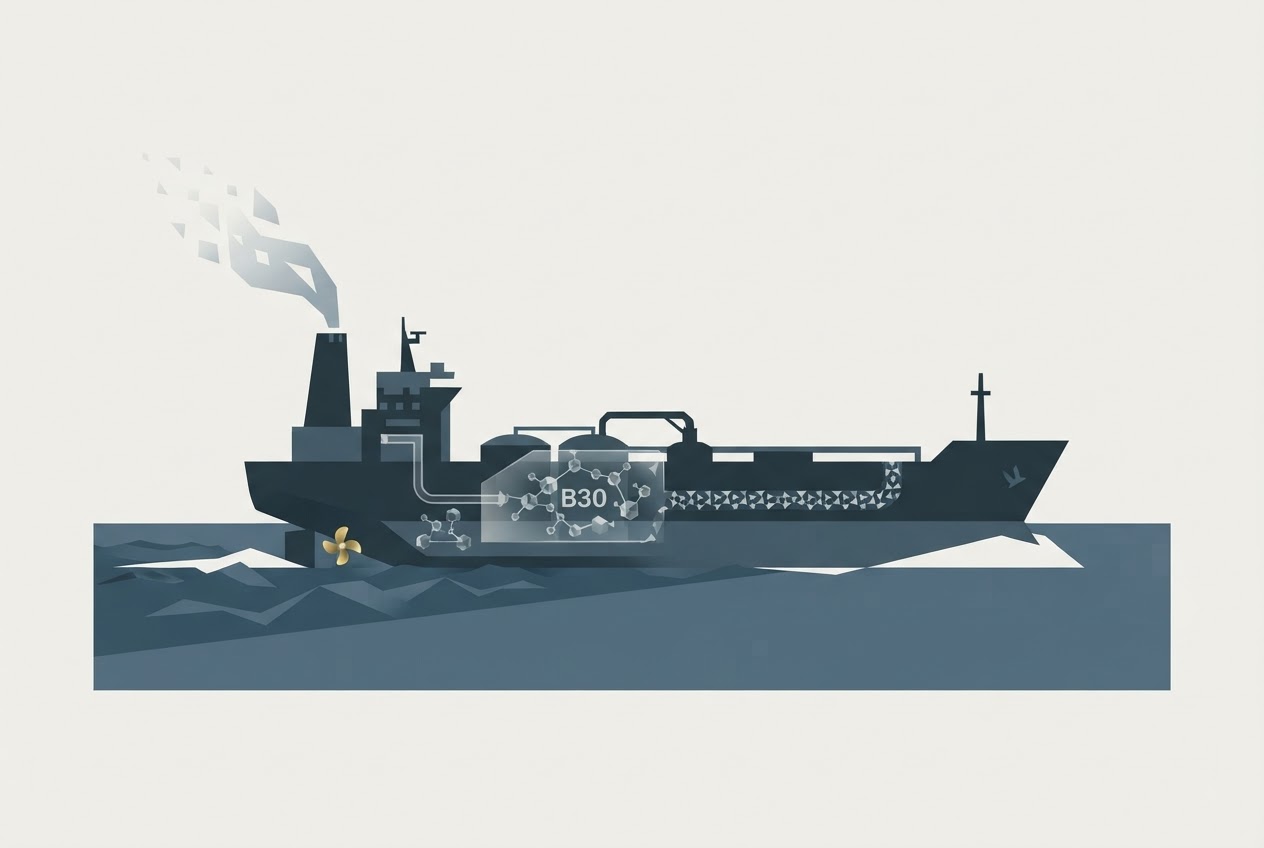
Ardmore said it bought and consumed biofuel blends of up to B30 during 2025, achieving full compliance with FuelEU Maritime. Noonan credited technical staff and crews with managing storage, fuel handling and combustion while maintaining vessel performance. He described that experience as evidence that biofuels could be used at operational scale.
The measures come against a tightening regulatory backdrop. The EU Emissions Trading System has covered large ships calling at EU ports since January 2024, while FuelEU Maritime took effect in January 2025. The article also noted increasingly stringent requirements under the IMO’s Carbon Intensity Indicator and continuing negotiations on its Net Zero Framework.
On operational performance, Ardmore reported no Port State Control detentions in 2025, with 81% of inspections finding no deficiencies. Its training measures include on-demand learning through AFLIX and virtual-reality vessel familiarisation. Every shore-based employee visited a vessel during the year, while the company’s WAVES initiative helped increase its number of women officers from 16 to 25.