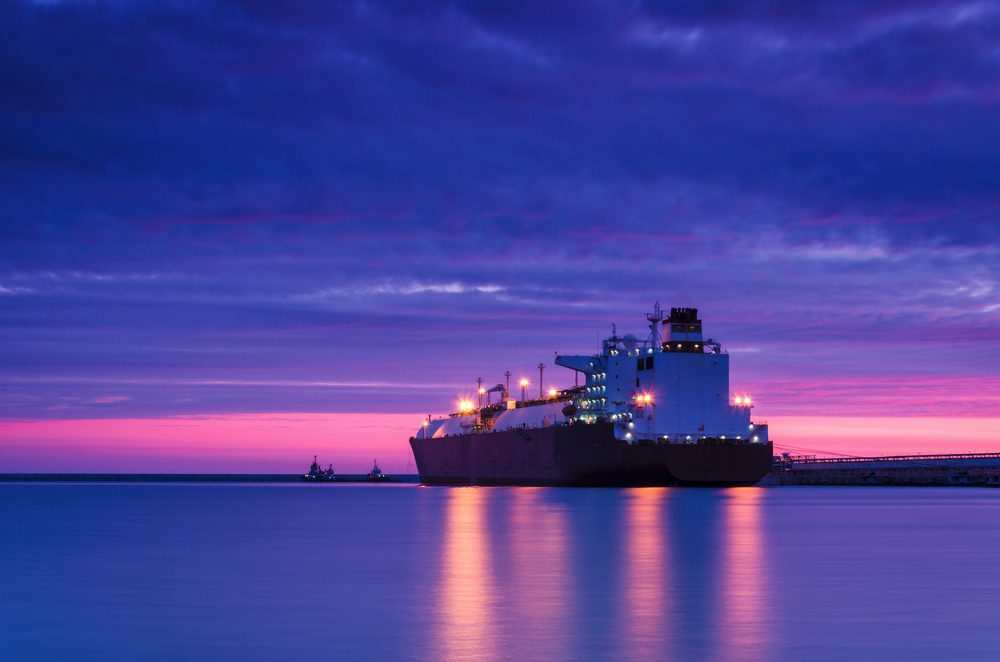
The US Maritime Administration (MARAD) has approved the application for the $8.2 billion Texas ST LNG export port following what the Department of Transportation (DOT) described as the fastest deepwater port licence review in more than two decades, gCaptain reported. DOT said the process took nearly 3.7 years less than the historical average, a reduction of 70%.
The approval remains conditional and does not constitute a licence to operate. ST LNG must provide a written commitment not to alter its deepwater port application and demonstrate compliance with nine conditions before a licence can be issued. These include financial responsibility, oil spill liability and eventual decommissioning. The necessary compliance documents must be submitted at least 90 days before licence issuance.
According to gCaptain, the faster review followed changes introduced in January that made MARAD the lead agency, replacing an arrangement in which it shared responsibility with the US Coast Guard. DOT said MARAD completed the Final Environmental Impact Statement in 410 days. The Coast Guard retains a supporting role covering vessel operations, maritime safety and security.
A DOT spokesperson told gCaptain that the main saving came from removing overlapping administrative work rather than resolving problems within a particular partner agency. Previously, environmental drafts, information requests and legal reviews often passed sequentially between agencies. The revised process uses one federal docket and a unified project management team, with coordinated public comment periods and a consolidated timetable. DOT said the project received no one-off procedural exemptions; the January framework will also govern future reviews.
DOT maintained that the changes did not weaken environmental requirements. MARAD is bringing cooperating agencies, including NOAA Fisheries, into discussions earlier to identify biological studies and is seeking to use existing regional offshore data where appropriate. When project-specific seasonal monitoring is legally necessary, its schedule is incorporated alongside other review work rather than creating successive delays.
The development is planned in four phases. At full build-out, gCaptain reported, it would comprise 20 offshore platforms, four floating LNG storage units, four mooring systems and 7.7 miles of pipeline. Each phase includes facilities for gas treatment, liquefaction and LNG transfer, alongside accommodation and supporting infrastructure.